
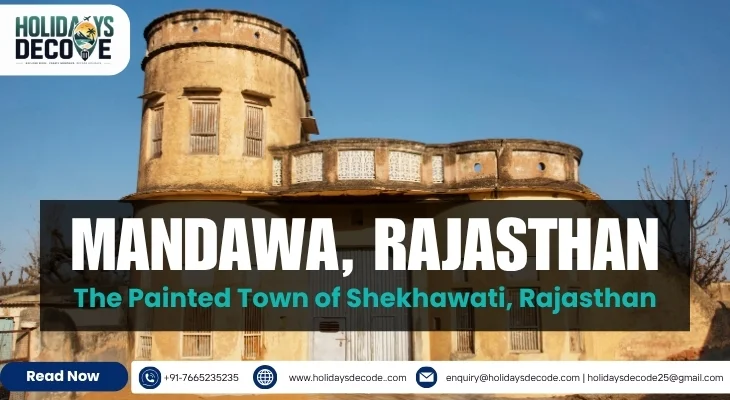
When travellers think of Rajasthan, grand forts, royal palaces, colourful bazaars and vast deserts often come to mind. But beyond the famous destinations lies a fascinating region where entire towns feel like open-air art galleries. Mandawa, located in the Shekhawati region of Rajasthan, is one of those places.
Known for its beautifully painted havelis, historic architecture and colourful frescoes, Mandawa offers a quieter alternative to Rajasthan's more crowded tourist destinations. The town's walls tell stories through paintings depicting mythology, royal life, animals, flowers, European influences and scenes from everyday life.
Mandawa was once an important centre on historic trading routes connecting different parts of India with markets towards the Middle East and China. Wealthy merchant families built elaborate havelis here, decorating them with detailed frescoes. Today, these buildings form the heart of Mandawa's heritage appeal.
If you are interested in history, architecture, photography, culture or slow travel, Mandawa deserves a place on your Rajasthan itinerary.
Table of Contents
- Where Is Mandawa?
- Why Is Mandawa Famous?
- Best Places to Visit in Mandawa
- What Makes Shekhawati Frescoes Special?
- Things to Do in Mandawa
- Best Time to Visit Mandawa
- How Many Days Are Enough for Mandawa?
- Nearby Places to Visit from Mandawa
- Mandawa for Families
- Mandawa for Couples
- Mandawa for Photography Lovers
- How to Reach Mandawa
- Tips for Visiting Mandawa
- Mandawa vs Jaipur: Which Should You Visit?
- Suggested 2-Day Mandawa and Shekhawati Itinerary
- Is Mandawa Worth Visiting?
Where Is Mandawa?
Mandawa is located in Jhunjhunu district of Rajasthan, within the culturally rich Shekhawati region of northeastern Rajasthan.
Shekhawati includes parts of the present-day Jhunjhunu, Sikar and Churu districts and is widely recognised for its historic havelis, frescoes, forts, temples and other heritage structures.
Mandawa's location also makes it suitable for a short heritage getaway from major cities in North India.
Why Is Mandawa Famous?
Mandawa is best known for its painted havelis and frescoes.
During the period when merchant communities prospered through trade, wealthy families constructed large mansions and commissioned artists to decorate their walls. These paintings transformed ordinary streets and courtyards into colourful displays of art.
The frescoes are particularly interesting because they do not depict only traditional religious themes. Depending on the haveli, visitors may find images representing mythology, animals, people, transportation, social life and influences from the changing world.
Rajasthan Tourism describes Mandawa as one of the painted towns of Shekhawati and highlights its havelis, frescoes and historic character.
Best Places to Visit in Mandawa
1. Mandawa Fort
Mandawa Fort is one of the most recognisable landmarks in the town.
The fort reflects the region's Rajput heritage and features decorated interiors, arches, courtyards and traditional artwork. Its entrance and architectural details provide an introduction to the artistic character that continues throughout Mandawa.
The fort was built under Thakur Nawal Singh, who also played an important role in the development of Mandawa and Nawalgarh. Rajasthan Tourism notes the fort's connection with the town's historic development.
Today, the fort's heritage character also contributes to Mandawa's appeal as a destination for heritage stays and special events.
Best for: History, architecture, photography and heritage experiences.
2. Goenka Double Haveli
Goenka's Double Haveli is among the heritage buildings visitors can explore in Mandawa.
The haveli is known for its traditional Shekhawati architecture and detailed exterior decoration. Like many buildings in the town, its artistic details demonstrate the importance that merchant families placed on architecture and visual storytelling.
Take time to look closely at the walls rather than simply photographing the building from outside. Small details in the paintings often reveal interesting stories and artistic influences.
Best for: Architecture and photography.
3. Jhunjhunuwala's Golden Haveli
Jhunjhunuwala's Golden Haveli is another interesting heritage stop in Mandawa.
The building showcases the decorative style associated with Shekhawati's merchant havelis. Its architecture and painted surfaces provide an opportunity to understand why Mandawa is often described as a painted town.
Best for: Heritage walks and photography.
4. Chokhani Haveli
Chokhani Haveli is another example of Mandawa's distinctive merchant architecture.
The Chokhani family name is associated with several historic buildings in the region. Visitors interested in Shekhawati's architectural heritage should spend time examining the decorative elements, balconies, windows and painted walls.
Best for: Architecture enthusiasts and photographers.
5. Seth Dayaram Dedraj Goenka Haveli
Seth Dayaram Dedraj Goenka Haveli is another heritage attraction that can be included in a Mandawa walking tour.
Rather than treating each haveli as an isolated monument, visitors can explore them as part of the larger historic streetscape. This is one of the things that makes Mandawa different from destinations where heritage is concentrated inside a single fort or palace.
6. Ladia Well
Ladia Well is an example of the traditional water structures found in the region.
Historic wells and baolis played an important role in Rajasthan's settlements, particularly in areas where water was an important and sometimes scarce resource.
Exploring such structures adds another dimension to a Mandawa heritage walk because the town's history is not limited to havelis and forts.
7. Mandawa's Old Streets and Fresco Walls
One of the best experiences in Mandawa does not require a ticket or a fixed sightseeing schedule.
Simply walking through the old parts of town can reveal beautifully decorated façades, traditional doors, balconies and fading frescoes.
The art is not always confined to famous havelis. Some paintings appear on ordinary-looking buildings and walls, which makes exploring the streets on foot particularly rewarding.
Rajasthan Tourism describes Shekhawati's architecture as a combination of richly decorated havelis, delicate woodwork, old doors and windows, with paintings covering subjects ranging from religious stories to social life and changing technology.
What Makes Shekhawati Frescoes Special?
The frescoes are perhaps the biggest reason to visit Mandawa.
Artists decorated walls and ceilings using a variety of colours and visual styles. Traditional religious stories appear alongside scenes that reflect the changing world.
Some paintings show:
- Hindu gods and goddesses
- Animals and birds
- Royal processions
- Village life
- Mythological stories
- Flowers and decorative patterns
- European-style figures
- Cars and trains
- Historical events
- Merchant and family life
This combination of traditional Indian themes and newer influences makes Shekhawati's frescoes particularly fascinating.
Things to Do in Mandawa
Take a Heritage Walk
Walking is arguably the best way to experience Mandawa.
A heritage walk allows you to appreciate architectural details that can easily be missed when travelling by car.
Take your time to examine:
- Painted façades
- Wooden doors
- Windows
- Courtyards
- Decorative balconies
- Frescoes
- Traditional streets
Explore the Havelis
Instead of visiting only one famous haveli, consider exploring several. Each building can have its own artistic style and collection of paintings.
Photograph the Frescoes
Mandawa is a dream destination for photographers.
Morning and late afternoon can provide attractive natural light for architectural photography. However, always respect restrictions regarding photography inside heritage properties.
Stay in a Heritage Property
For a more immersive experience, consider staying in a restored haveli or heritage hotel.
A heritage stay can allow you to experience traditional architecture beyond a short sightseeing visit.
Try Rajasthani Food
Your Mandawa trip is also an opportunity to sample regional cuisine.
Depending on the property or restaurant, you may find dishes such as:
- Dal baati churma
- Gatte ki sabzi
- Ker sangri
- Bajra roti
- Churma
- Traditional Rajasthani sweets
Best Time to Visit Mandawa
October to March
The cooler months are generally the most comfortable period for exploring Mandawa.
This is particularly important because much of the sightseeing involves walking outdoors and exploring old streets.
Winter mornings and evenings can be cool, so carry a light jacket or warm layer.
April to June
Summer temperatures can become very high. If travelling during this period, plan heritage walks for early morning or late afternoon and keep yourself hydrated.
July to September
The monsoon can bring some relief from the intense summer heat. However, weather conditions can vary, so check the forecast before travelling.
How Many Days Are Enough for Mandawa?
For most travellers, one to two days are sufficient to explore Mandawa.
One-Day Mandawa Trip
You can cover:
Morning
- Mandawa Fort
- Major havelis
- Old-town heritage walk
Afternoon
- Explore additional frescoes
- Visit traditional markets
- Lunch at a heritage property
Evening
- Photography walk
- Relax at your hotel
Two-Day Mandawa Trip
With two days, you can explore Mandawa at a slower pace and include nearby Shekhawati destinations such as Nawalgarh, Fatehpur or Dundlod.
Rajasthan Tourism lists Mandawa, Nawalgarh, Fatehpur, Dundlod and several other towns among the important destinations of Shekhawati.
Nearby Places to Visit from Mandawa
Nawalgarh
Nawalgarh is another important Shekhawati destination famous for its havelis and frescoes. Rajasthan Tourism describes it as a particularly attractive destination for art lovers and highlights several historic havelis and the Dr. Ramnath A. Poddar Museum.
Fatehpur Shekhawati
Fatehpur is another fascinating heritage town in the region. Its attractions include historic havelis, temples and other architectural landmarks. Rajasthan Tourism describes it as the cultural capital of Shekhawati.
Dundlod
Dundlod is known for its fort, havelis and Rajput-Mughal architectural influences. The town can be a worthwhile addition to a Shekhawati heritage circuit.
Alsisar
Alsisar offers another glimpse into Shekhawati's heritage, with its palaces, havelis and cenotaphs. The town is also associated with traditional Rajasthani hospitality and heritage tourism.
Mandawa for Families
Mandawa can be an interesting family destination because it combines travel with history and visual learning.
Children can learn about:
- Traditional architecture
- Rajasthani history
- Fresco painting
- Merchant communities
- Traditional water systems
- Local culture
Instead of simply moving from one tourist attraction to another, parents can turn a heritage walk into an informal history lesson.
Older children and teenagers who enjoy photography may also find the painted streets particularly interesting.
Mandawa for Couples
Mandawa offers a quieter alternative to Rajasthan's major tourist cities.
Couples can explore the old town, stay at a heritage property, photograph the frescoes and enjoy a traditional dinner in a historic setting.
The town's relatively slow pace makes it suitable for travellers who prefer cultural exploration rather than a tightly packed sightseeing schedule.
Mandawa for Photography Lovers
If photography is one of your interests, Mandawa deserves more than a quick stop.
Look for details rather than only wide photographs:
- Painted doors
- Windows
- Fresco panels
- Balconies
- Courtyard architecture
- Decorative ceilings
- Old signboards
- Textured sandstone walls
- Traditional streets
The changing condition of some frescoes is also part of the town's visual character. Photograph respectfully and avoid touching painted surfaces.
How to Reach Mandawa
Mandawa is connected by road with several major cities in Rajasthan and North India.
By Road
Road travel is one of the most convenient ways to reach Mandawa, particularly if you want to explore other Shekhawati towns during the same trip.
By Train
Travellers can use railway stations serving the Shekhawati region and continue towards Mandawa by road.
By Air
For air travellers, Jaipur is one of the major airports used for reaching destinations in this part of Rajasthan, followed by a road journey to Mandawa.
Before travelling, check current train schedules, road conditions and transport availability.
Tips for Visiting Mandawa
1. Wear Comfortable Shoes
A large part of the experience involves walking through old streets.
2. Carry Water
Rajasthan's climate can be dry, particularly outside the winter season.
3. Carry Sun Protection
Sunglasses, sunscreen and a hat can be useful during daytime sightseeing.
4. Hire a Local Guide
A knowledgeable local guide can explain the stories behind the frescoes and the families who built the havelis.
5. Do Not Touch the Frescoes
Historic paintings are delicate. Avoid touching or leaning against painted walls.
6. Ask Before Taking Photographs
Some heritage properties may have their own photography rules.
7. Explore Beyond the Famous Havelis
The charm of Mandawa is not limited to a handful of attractions. Walk through the surrounding streets and observe the smaller architectural details.
8. Travel Slowly
Mandawa is best experienced without rushing. Give yourself enough time to look at the artwork and understand the character of the town.
Mandawa vs Jaipur: Which Should You Visit?
Jaipur is ideal for travellers looking for large forts, palaces, museums, shopping and a bustling urban atmosphere.
Mandawa is better suited to travellers who want:
- Fresco paintings
- Heritage walks
- Merchant havelis
- Small-town culture
- Quiet streets
- Photography
- Slow travel
If you have enough time, there is no need to choose between them. Mandawa can complement a larger Rajasthan itinerary that includes Jaipur and other heritage destinations.
Suggested 2-Day Mandawa and Shekhawati Itinerary
Day 1 – Discover Mandawa
Start with Mandawa Fort and then explore the historic town on foot.
Visit some of the prominent havelis and spend time studying their frescoes.
After lunch, continue exploring the old streets and traditional architecture.
In the evening, enjoy a heritage dinner or relax at your accommodation.
Day 2 – Explore Shekhawati
Use the second day to explore another nearby heritage town.
You could consider:
Mandawa → Nawalgarh → Dundlod → Mandawa
or
Mandawa → Fatehpur → Mandawa
This allows you to experience the wider Shekhawati region rather than limiting the trip to a single town.
Is Mandawa Worth Visiting?
Absolutely, especially if you enjoy destinations where the attraction is the character of the place itself.
Mandawa does not have the scale of Jaipur or the dramatic desert experience of Jaisalmer. Its appeal is subtler. The town invites visitors to slow down, walk through historic streets and discover stories painted across the walls of centuries-old buildings.
For architecture lovers, photographers, history enthusiasts and travellers looking for lesser-explored Rajasthan, Mandawa can be a memorable addition to a Rajasthan trip.
Mandawa is one of Rajasthan's most fascinating heritage destinations and an excellent introduction to the Shekhawati region.
Its forts, havelis, frescoes, traditional streets and merchant-era architecture reveal a different side of Rajasthan—one shaped not only by royal families but also by prosperous trading communities and the artists they supported.
A visit to Mandawa is not simply about checking famous buildings off a sightseeing list. It is about walking through a town where history remains visible on walls, doors, courtyards and streets.
If you are planning a Rajasthan road trip, consider adding Mandawa to your route. Spend a day or two exploring its painted havelis, talk to local people, try regional food and take the time to notice the small details.
Mandawa may be a small town, but its walls tell some of the biggest stories of Shekhawati.